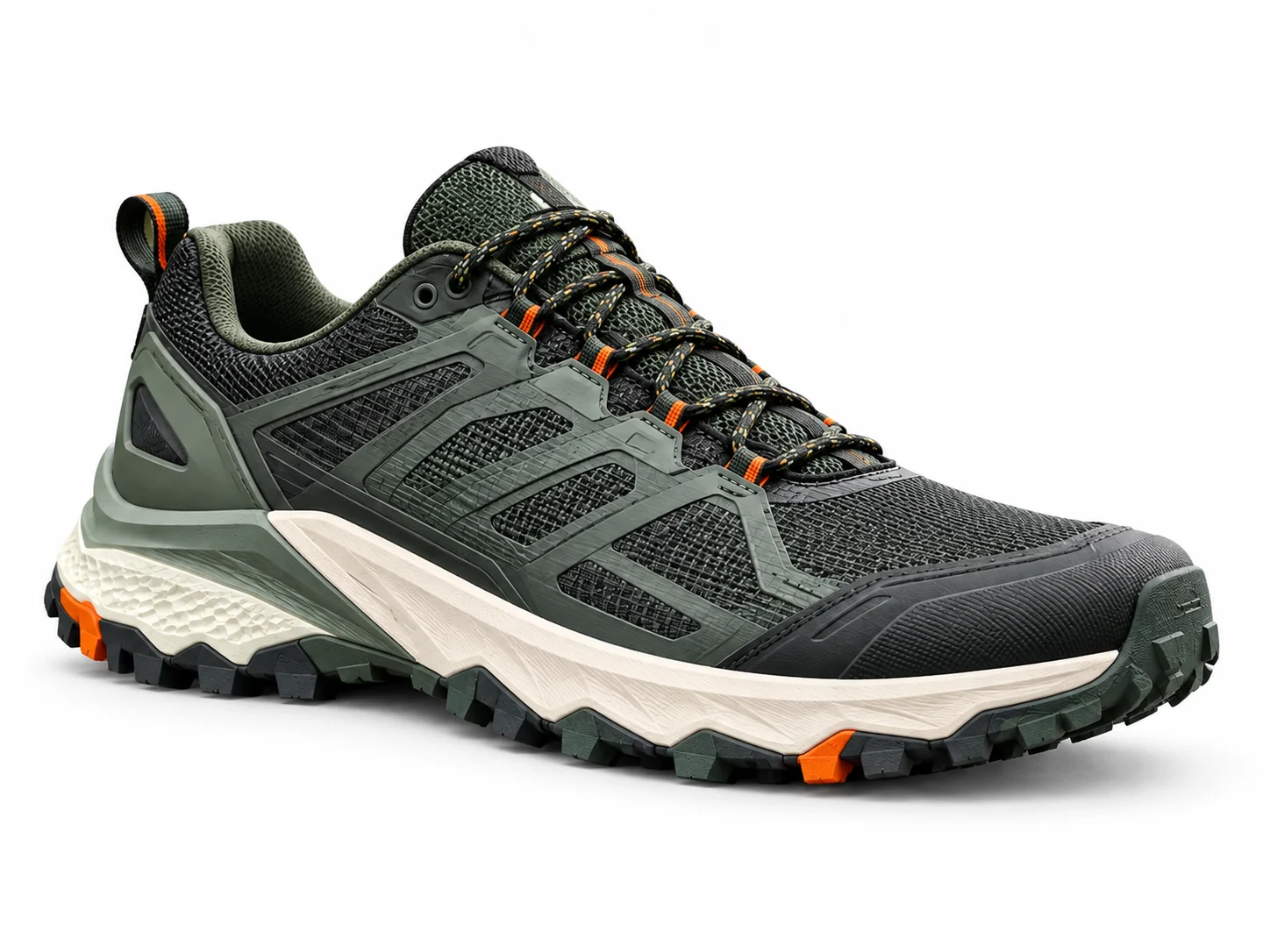
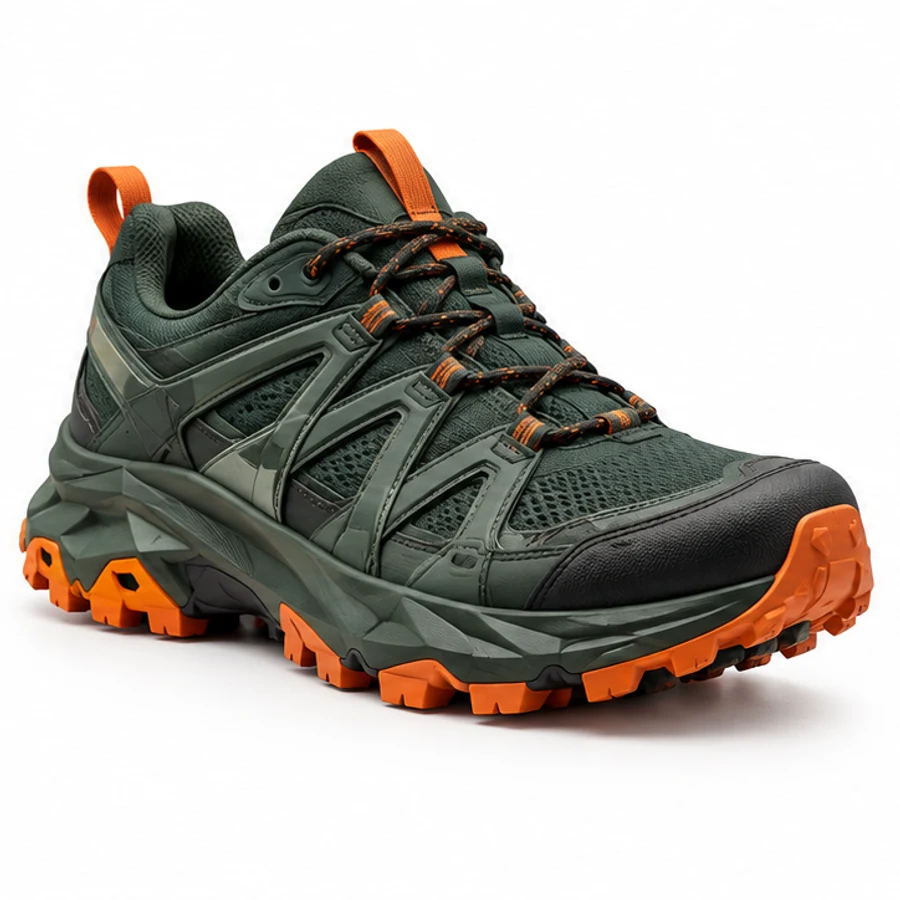
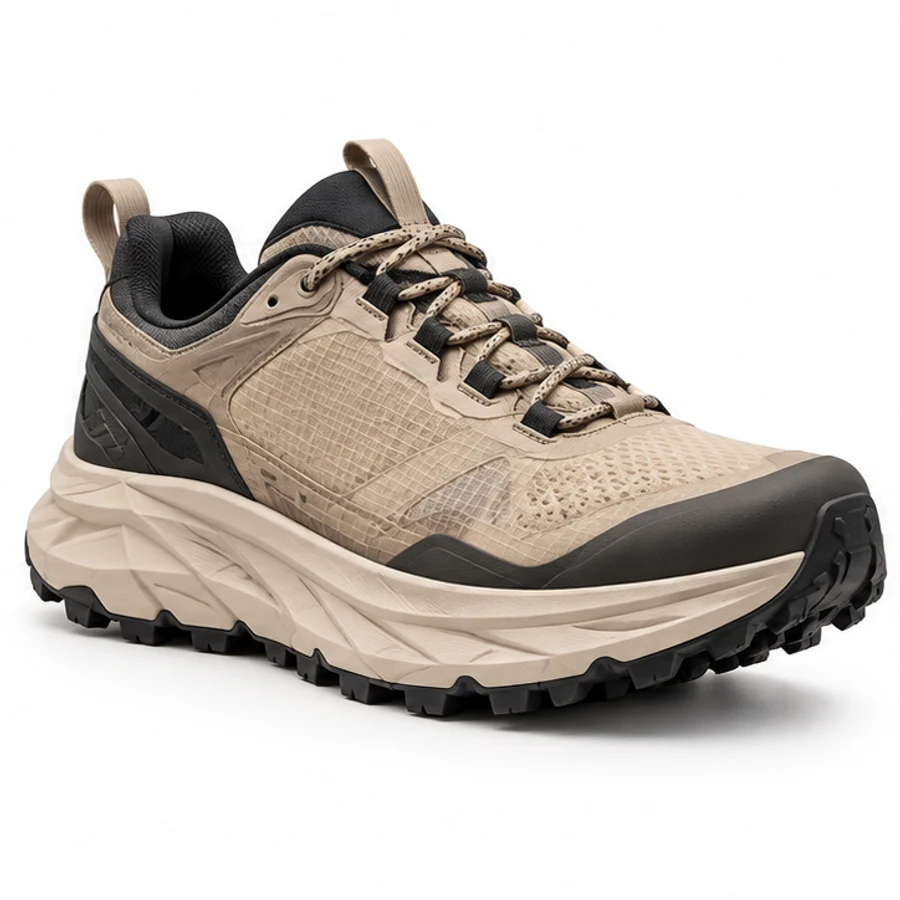
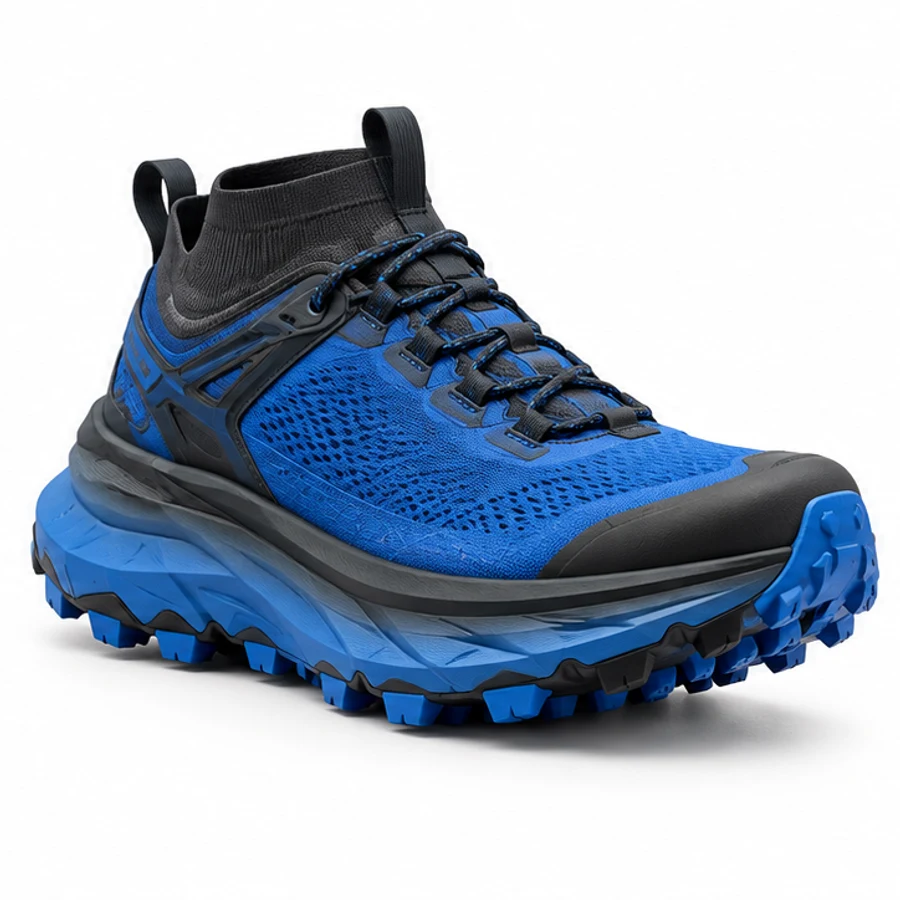
Define the terrain
A trail shoe should begin with where it will be used
Hard-packed paths, loose gravel, wet rock, mud and mixed mountain terrain place different demands on lug geometry, rubber compound, base stability and upper protection. Distance and climate also affect cushioning, drainage, fit allowance and material selection.
Before development, Winmamba aligns the intended surface, runner level, distance, speed, weather exposure, carrying load and retail position. This prevents a generic outdoor upper from being placed on a road-running bottom without a coherent performance target.
Ground contact
Traction is a system of geometry, compound and coverage
Lug depth alone does not determine grip. Direction, spacing, edge shape, contact area, flex channels and self-shedding behavior must support the intended terrain. Rubber compound selection is balanced against wear, wet-surface requirements, temperature range, weight and cost.
Upper engineering
Protection without unnecessary bulk
Trail uppers may combine abrasion-resistant mesh, mapped reinforcements, toe protection, debris-control tongue constructions and secure heel geometry. The package should hold the foot on uneven ground while allowing suitable flex, drainage and climate comfort.
Bonded films, woven structures, engineered mesh and protective overlays are selected according to the expected abrasion zones. Fit trials should evaluate downhill toe clearance, lateral hold and lace pressure, not only standing comfort.
Midsole and stability
Control the platform before increasing stack
Trail cushioning should account for surface variability and lateral loading. Base width, sidewall geometry, heel bevel, forefoot flex, foam selection and any rock plate or protective insert must work together. Supercritical TPU, PEBA or TPEE options can be evaluated where appropriate, but final selection follows the terrain, stability and durability brief.
For longer-distance concepts, the team balances underfoot protection and cushioning with ground awareness. For faster trail models, weight and transition may receive greater emphasis without ignoring torsional control.
Trail validation
Test the failure points that terrain exposes
A project-specific plan may evaluate outsole abrasion, flex resistance, upper tear, toe protection bonding, sole adhesion, wet and dry traction methods, water handling, dimensional stability and fit under movement. Controlled field wear on representative terrain can add practical feedback before commercialization.
Brands should define required standards and acceptance criteria early, especially when products will be sold across multiple markets. Winmamba links development records, sample approval and production quality gates to the agreed specification.
Information for an accurate trail running shoe inquiry
- Primary terrain and weather conditions
- Distance, runner profile and target shoe weight
- Required traction, protection and water-management direction
- Target FOB, size range and expected order quantity
- Preferred midsole, plate or rock-protection concept
- Testing requirements and launch schedule